The Lewis County Herald - 3/26/24
March is Colorectal Cancer Awareness Month and I’ve been given the opportunity to share my experiences with more people to help spread awareness about the second leading cause of cancer deaths (following lung and bronchus cancer).
Along with pancreatic and breast cancer, they are responsible for nearly 50 percent of all cancer deaths in the US.
In the past couple of years, we’ve been on an adventure together that’s seemed like a fast ride on a fierce roller-coaster.
Two years ago I didn’t know many statistics about colorectal cancers. I know a lot of those numbers now and they’re eye-opening.
I’ve shared some of those numbers with those who have taken this journey with me through these columns in The Herald and here in my blog. I’ve met many folks along the way because we share having had a diagnosis of colorectal cancer.
If you’ve traveled along on this journey, you’ve already experienced many peaks and valleys with Tammy and me but I want to review the highlights. And I’m going to tell you about the importance of early screening, even if you are symptom-free and have no family history of cancer.
As my 60th birthday was approaching, Tammy scheduled an appointment for me to meet with Dr. Ramon Barcelona at PrimaryPlus. He and I usually talk about photography and we show each other some of the landscapes we’ve captured.
During this appointment we also talked about getting me up-to-date on vaccinations and immunizations, and having screenings appropriate for my age and medical history.
I was generally healthy, a little overweight, and my cholesterol numbers could have been better. Much the same as my previous milestone checkups for the past several years.
He recommended Cologuard as a non-invasive screening. I had taken that screening a few years earlier and had received a negative result.
This time the result was inconclusive and Dr. Barcelona referred me to Dr. Donald Weller, a gastroenterologist in Maysville, for a colonoscopy.
The worst part about a colonoscopy is in preparing for it. The taste of the prep formula isn’t so bad, it’s the volume you are required to consume.
Dr. Weller came to the room where Tammy and I were waiting for a preliminary report following the August 4, 2022, procedure. He said he had encountered a “mass” and harvested a sample for testing. He would schedule us back to review those results.
We returned to his office on August 15, my birthday, where he told us the mass was determined to be cancerous.
Dr. Weller referred us to Dr. Bruce Belin, a colorectal surgeon in Lexington. On September 27, 2022, Dr. Belin removed my entire colon, 23 lymph nodes, and some connective tissue. I awoke after the surgery with an ileostomy, a temporary digestive tract detour to allow my body to heal enough to reconnect things up later – sans colon.
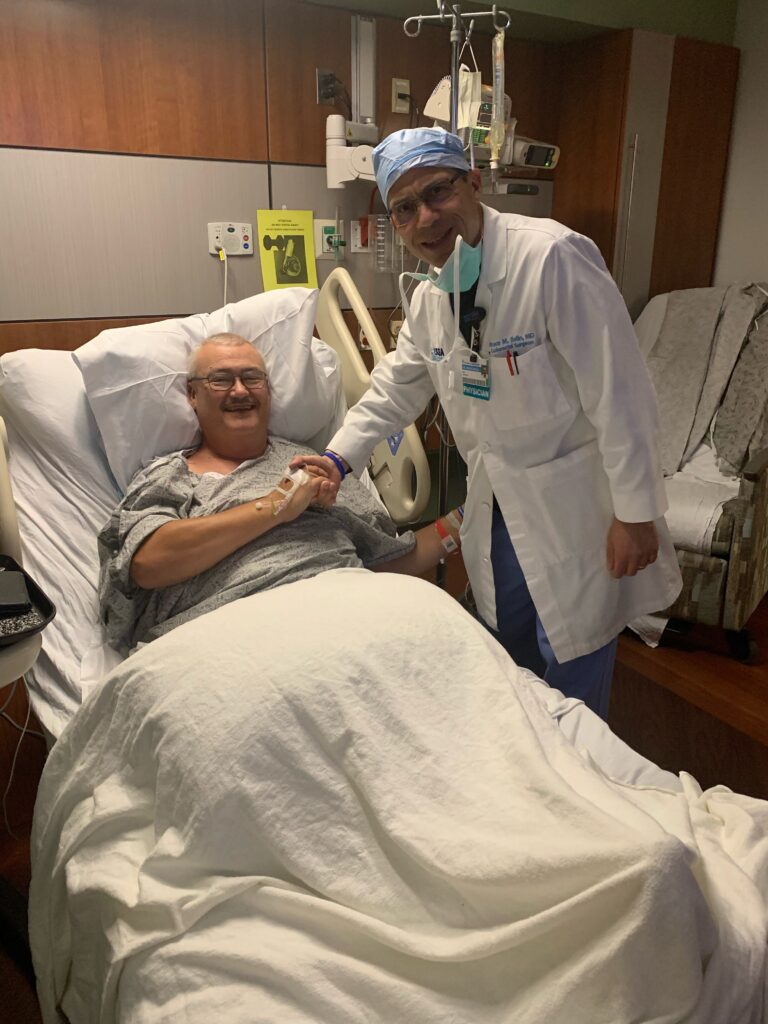
My surgeon, Dr. Belin, stops by to check up on me the day after the first procedure.
Test results on the material that was removed determined the cancer to be adenocarcinoma, stage 2A. Dr. Belin called us with those results and added the pathologist who examined the tissue had indicated in the report that the cancer was entirely contained in the colon.
We were referred to an oncologist who suggested an experimental blood test to see if any cells matching that excised mass remained in my body. Just before Christmas (2022) he called to report the results were negative and stopped short of declaring me cancer-free.
On Valentine’s Day last year we returned to Lexington where Dr. Belin would reverse the ileostomy. During this procedure he encountered an “ominous” mass the size of a mango and removed it.
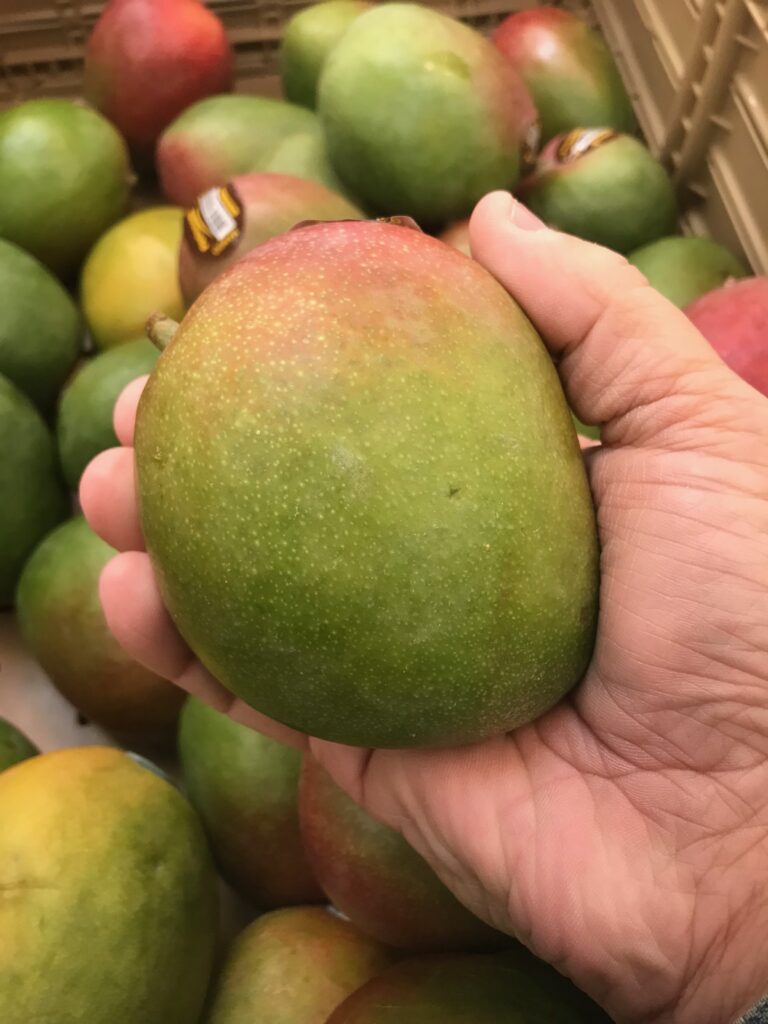
Mango size mango (for scale)
Turns out it was just scar tissue and some other stuff that had taken up residence in my abdominal cavity.
Dr. Belin referred me to Dr. Scott Pierce, another oncologist (the first one moved out of the area) who researched my case and gave me a thorough examination.
I had some CT scans which set a baseline to compare with future scans to monitor for any changes and see if cancer should become established somewhere else in my body. I had a scan in October with the next scan to be in April.
Now, get ready for some statistics.
• After a first colon cancer, 80 percent of recurrences happen in the first two to three years.
• Once you get beyond five years and there’s no sign of recurrence, the patient is likely “cured.”
• The five-year survival rate of people with localized stage colorectal cancer is 91 percent. About 37 percent of patients are diagnosed at this early stage.
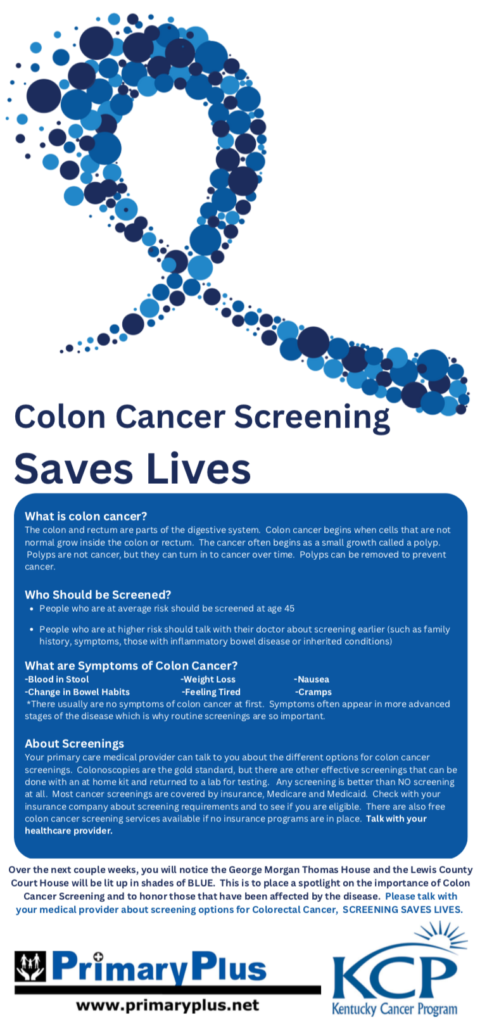
The World Heath Organization notes that many people will not have symptoms in the early stages of the disease. Regular screenings are important to catch the disease early and begin treatment.
When cancer has spread outside the colon or rectum (later stages), survival rates are lower.
By all indications, I was diagnosed at an early stage. The cancer was discovered through a screening not prompted by any symptoms or family history. I had neither.
The screening was performed because it is recommended for people my age (and younger). It wasn’t my first screening. It was my first screening that indicated further testing.
According to the American Cancer Society (ACS), in the United States colorectal cancer is the second most common cause of cancer deaths. It's expected to cause about 53,010 deaths this year.
The number of deaths (per 100,000 people per year) from colorectal cancer has been dropping for several decades. One reason for this is that colorectal polyps are now more often found by early screening and removed before they can develop into cancers.
The ACS reports that about one in three people in the US who should get tested for colorectal cancer have never been screened.
Since I began publicly sharing details of our experiences, several people have told me they have scheduled a screening or colonoscopy.
I have heard from several others who have also taken this journey.
When Tammy and I chose to share our story, we didn’t know how it would end. We still don’t.
It’s been 18 months since the surgery to remove my colon. I’m within that two-year period when recurrence most likely.
A primary goal of telling my story publicly was to create awareness. If you’re like me, you can read statistics all day long and they have no real impact. It makes a difference when you attach those numbers to someone in your community.
“Dennis’ five-year survival rate is 91 percent because his colon cancer was detected early. Later detection would have dropped those odds significantly.”
I can relate to that.
There are lots of variables. Age and overall health, whether the cancer started on the left or right side of the colon, if the cancer cells have certain gene or protein changes, how well the cancer responds to treatment, and other factors must be considered.
My message today is take advantage of health screenings. I have no doubt that by the time I realized I was having symptoms, the cancer would have spread beyond my colon and my prognosis would have been much different.
I also have no doubt that prayers have been answered.
There are no words to describe how thankful and blessed we are. The support from our family, church family, friends, coworkers, and the community has been tremendous.
March is Colorectal Cancer Awareness Month.
And now this message, in my best radio voice . . .
“Cancer screenings save lives.”
We always like reading your journey, Dennis. I’m sure so many others have to. I’m sure by you telling your story it has helped more than you could ever imagine. You have such a wonderful testimony to give and I’m sure you do that all the time. God sure has been with you through this journey. We definitely will continue to keep you in our prayers and can’t wait to read where you say, “I’m cancer free.” May God continue to bless you and Tammy abundantly..